
Your teams can be doing their jobs and still fail your customer. Your salespeople, technical specialists, account managers and customer success teams can attend the same meetings, pursue the same goals and still be completely misaligned. Here’s what your brain can teach us about ownership and cross-functional alignment.
How to Create Greater Cross-Functional Alignment and Shared Ownership Across Your Sales Organization
There’s a fascinating neuroscience experiment called the Rubber Hand Illusion.
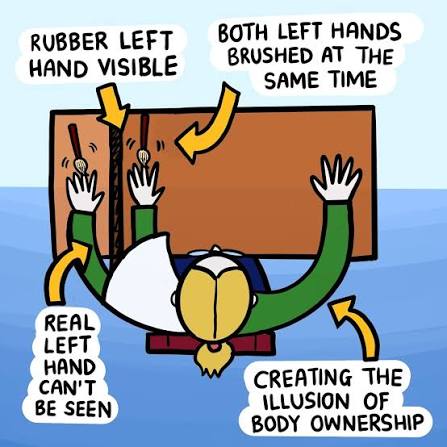
Researchers hide a person’s real hand and place a realistic rubber hand in front of them. They stroke both simultaneously, synchronizing what the person sees and feels.
Something remarkable happens. Many participants begin to experience the rubber hand as part of their own body. The brain begins to accept something that doesn’t belong to the body as its own.
When researchers suddenly threaten the rubber hand, participants can flinch and experience a genuine stress response, even though they know it isn’t their hand.
Why? Because when what the brain sees and what the body feels become synchronized, it can create a sense of ownership. It can begin to accept the rubber hand as its own.
Now, consider what happens in your organization, especially during periods of significant change.
While bodily ownership differs from organizational ownership, the experiment offers a powerful leadership lesson.
How the Illusion of Alignment Undermines Performance
The experiment demonstrates how the brain can develop a sense of bodily ownership when visual and physical signals become synchronized.
When people receive conflicting signals around what cross functional-alignment really needs, how can you expect them to create a shared understanding of what they’re working toward and take ownership of the same outcome?
Think about the messages your people receive every day.
One salesperson believes an opportunity is qualified And ready to close. The technical specialist sees significant gaps in the customer’s requirements. The account manager has a different understanding of the customer’s priorities. Another team makes commitments without involving the people responsible for delivering them.
Your salespeople, managers, technical specialists, and other customer-facing teams may share the same goals. But are they truly aligned on how to achieve them?
Everyone is busy. Everyone believes they’re doing the right thing. Yet people may be moving in different directions and operating with different priorities, expectations, information, and definitions of success.
And ultimately, your customers experience the disconnect.
Each function has legitimate responsibilities. Organizations emphasize revenue and closing opportunities. Technical teams prioritize implementation requirements and feasibility. Customer success focuses on adoption and long-term value.
The problem arises when those priorities are not connected to a common customer strategy. Without a shared customer strategy, people make decisions based on their individual responsibilities without considering how they affect other teams and the customer.
That’s when opportunities stall, communication breaks down, commitments get missed, and frustration builds between teams.
You can’t create alignment simply by telling people to collaborate. Instead, create the conditions for shared ownership, where people understand how their individual contributions connect to one unified goal.
How Sales Leaders Turn Cross-Functional Alignment Into Shared Ownership and Action
1. Create One Shared Understanding of the Customer And the Goal
Before pursuing an opportunity, bring everyone involved together to establish a common understanding of the customer’s business priorities, challenges, buying process, decision-makers, and desired outcomes.
Don’t assume that because everyone attended the same customer meeting, they walked away with the same understanding.
Ask, “What problem are we helping this customer solve? How will they measure success? What do we know, what are we assuming, and where do we see things differently?”
The goal isn’t to get everyone to agree. It’s to uncover differences before they become problems.
2. Align Responsibilities, Expectations, and Commitments
Having a shared goal doesn’t mean people understand how to achieve it together.
Clarify who owns each part of the opportunity, where responsibilities overlap, what each person needs from the others, and how decisions will be made.
Ask, “What does each of us need to contribute to move this opportunity forward? Where are we dependent on one another? What commitments are we making to the customer and to each other? Where could our decisions create friction for the customer? How effectively are we all honoring our commitments?”
When people understand how their contributions affect the success of others, collaboration becomes more intentional and accountability becomes shared.
3. Turn Business Conversations Into Coaching Conversations
Alignment isn’t something you establish once during a kickoff meeting. It requires ongoing communication, especially when customer needs, priorities, and circumstances change.
Instead of assuming everyone is aligned, It requires ongoing communication. Use coaching conversations to continually test that assumption.
Ask, “Are we still working toward the same outcome? Where have expectations changed? What information are we missing? What friction do we need to be mindful of and how can we avoid it? When working together? What do we need from each other to succeed? What needs to change, if anything, so we can keep moving forward together?””
These conversations create opportunities for people to challenge assumptions, share perspectives, resolve differences, and strengthen their commitments.
And when disagreements arise, don’t mistake them for a lack of alignment.
Alignment doesn’t require everyone to think alike. It requires people to bring their different perspectives and expertise together to make better decisions and achieve a shared outcome.
Alignment isn’t measured by how often your people meet or how much they agree. It’s measured by how effectively they collaborate, honor their commitments and deliver on their shared promises to the customer.
The Real Measure of Alignment
This becomes even more important when your organization is experiencing significant change, introducing new products, redefining roles, or changing how people sell and collaborate.
People may be expected to work differently with colleagues they previously had little interaction with. New responsibilities and interdependencies create uncertainty, and without clear communication and shared expectations, that uncertainty creates friction.
As a leader, your responsibility is to ensure people aren’t simply working alongside one another but understand how their decisions, behaviors, and commitments affect the success of the entire team.
Return to the Rubber Hand Illusion.
The brain doesn’t experience the rubber hand as its own because someone tells it to. The illusion develops when the sensory information it receives becomes synchronized.
In your organization, shared ownership doesn’t emerge from synchronized sensory signals. It develops when people understand the same customer priorities, align their expectations, coordinate their actions, and honor their commitments to one another.
Alignment isn’t simply agreement. It’s To turn differences. Into a shared purpose translated into coordinated action.
The real measure of alignment isn’t how often your people meet, how well they get along, or whether everyone agrees on the strategy.
It’s whether your people can bring their different expertise, responsibilities, and perspectives together to deliver on the same promise to your customer.
When that happens, your customers stop experiencing separate departments and functions and instead, they experience one unified company working together toward their success.

Connect with Keith on LinkedIn here.